
When We Stopped Needing Each Other
Mar 19, 2026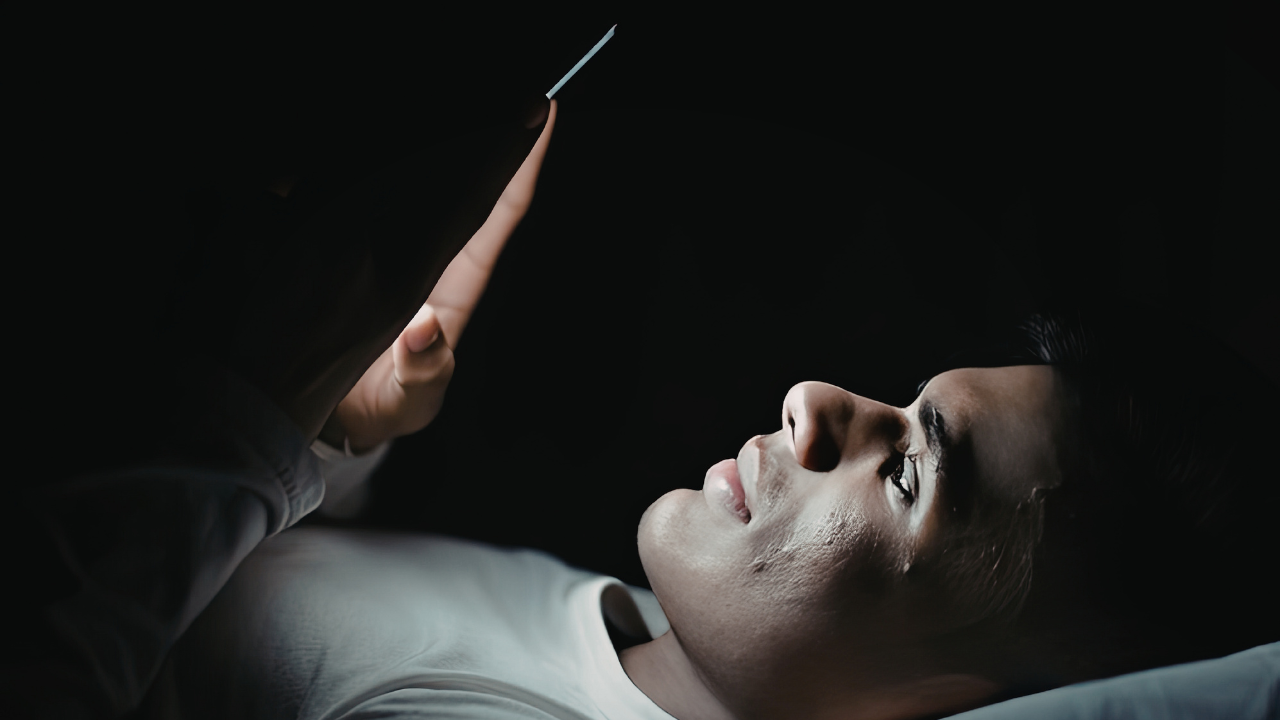
A therapist's honest grief about AI, human connection, and what gets lost when there's no friction.
I want to start with a confession. I noticed recently that a few of my closest friends had become a little… quiet. Not with big drama and something-is-wrong kind of way. More like the slow drift of a boat that isn't quite tied to the dock. A little further out each week. Still visible, still waving... just not quite reachable.
When I gently asked one of them about it, she told me, quite cheerfully, that she had been doing a lot of processing lately with ChatGPT. It is always there, she said. It never gets tired. It never has its own stuff going on. And it always understands her.
I sat with that for a while. Longer than I'd like to admit. And there is a part of me that thought, that couldn't be it, could it? Is that why our connection or friendship has felt a bit "off" lately?
Now here's the thing... an AI relationship is frictionless. And having spent almost twenty years as a therapist (and in my own therapy sessions) learning that friction is where the growth lives.
I'm not writing this as a rant against technology. If you know me... you know I'm a total tech-junkie! Always have been, and Lord knows I use it myself! I am, as I type this, acutely aware of the irony that this very piece was shaped in multiple brainstorming conversations with an AI tool. That tension is real, and I'm holding it. But I think there's something important we need to talk about before we sleepwalk past a threshold we can't easily come back from.
The I-Thou Problem
Martin Buber, the philosopher who gave us the concept of I-Thou, the idea that genuine human encounter happens in the space between two real, present, vulnerable people, would have had an absolute field day with 2026. His whole argument was that we live too much in I-It mode: treating others as objects, as means to an end, as things to be managed. The I-Thou moment, for Buber, was rare, precious, and utterly irreplaceable. It required both people to show up, fully, messily, humanly.
A chatbot cannot offer you an I-Thou moment. It can offer you something that feels like it, in the same way that a photograph of the sea can almost - almost - make you smell salt air. It's a beautiful approximation. But it's not the thing itself.
The real thing involves two people with their own histories, their own wounds, their own bad days. It involves being misunderstood and repairing it. It involves someone pushing back because they love you enough to. It involves sitting in silence together when words aren't enough. None of that is available at 2 am from a language model, however sophisticated.
What I'm Seeing in the Therapy Room
I want to be careful here, because the people I'm describing are people I care deeply about. My clients come to me because something in them is reaching for change, for understanding, for growth. And that reaching is brave. Full stop.
But lately, some of them are arriving to sessions already holding a neatly packaged explanation of themselves. "I've been chatting to ChatGPT about this, and apparently it's because of my attachment style." Or: "It explained that I'm not being unreasonable, I'm just dysregulated." And my heart, while genuinely delighted that they're engaging with these concepts, also quietly sinks a little.
Because here's what a library search can give you: the right words. The framework. The theory. The pattern. What it cannot give you is the felt sense of that truth landing in your body. The tears that surprise you. The moment when something you've known intellectually suddenly becomes something you know. Those moments don't happen in the space between a person and a screen. They happen in the space between two nervous systems, in what we call co-regulation. In the warmth of being truly witnessed by another human being.
A Jo-Anneism for you
"Insight without embodiment is just a very good story about yourself."
When clients stay in the shallows, spending the session reporting what they've already processed, rather than doing the processing, we lose something irreplaceable. The depth work doesn't happen at the level of explanation. It happens at the level of experience. And you can't outsource that.
The Loneliness Paradox
We are living through what researchers are increasingly calling a loneliness epidemic. In Ireland, in the UK, across the western world, people are more disconnected than at any point in modern history. More people are living alone. More people are eating alone. More people are going days without a meaningful conversation with another human.
And into that aching gap steps an AI that is always awake, always interested, never burdened, never distracted. Of course it's appealing. Of course it soothes. It is designed to soothe.
But I think we need to ask an uncomfortable question: is it healing the loneliness, or is it making it easier to live with? Because those are very different things. One opens a path back to connection. The other quietly closes the door.
The relational skills we build, how to tolerate someone else's bad mood, how to ask for what we need, how to repair after conflict, how to be truly present with another person, those skills only get built through practice. Through the beautiful, awkward, occasionally excruciating business of being in an actual relationship with actual people. There are no shortcuts. There are only repetitions.
We are outsourcing the very experiences that build the capacity for connection. And then wondering why connection feels harder.
So, Where Does That Leave Us?
I don't think the answer is to rail against AI or pretend it isn't here or isn't useful. I'd be a hypocrite of the highest order if I said that. But I do think we need to be much more intentional about what we are using it for, and what we might be quietly giving away in the process.
Use it to brainstorm. Use it to draft the email you can't find words for. Use it to research or learn or organise your thoughts. By all means, use it as a tool. But please, please! don't let it become your primary witness. Don't let it replace the friend who knows your whole story. Don't let it stand in for the therapist who will gently refuse to let you stay comfortable in a story that isn't quite true.
Because those relationships, the ones with real humans who bring their whole selves to the table, who challenge you and disappoint you and show up for you anyway, those are not inefficiencies to be optimised away. They are the whole point.
Buber knew it. The mystics knew it. And somewhere beneath all the clever conversation and the perfectly curated responses, I think we know it too.
We were made for each other. Messily, inconveniently, beautifully, but for each other.
✦ ✦ ✦
If this resonates with you, I'd love to hear your thoughts, not via a chatbot, but in an actual conversation. You can find me over in The Nest, or reach out directly. The door is always open.
Jo-Anne Mac Millan
Transpersonal therapist, coach, and Kajabi Expert based in County Clare, Ireland. With over 20 years in private practice, Jo-Anne supports heart-centred business owners and practitioners to build sustainable, soul-aligned online presences, without losing themselves in the process.
Author