
How I moved my own therapy practice online, and what I wish I'd known
Jun 22, 2026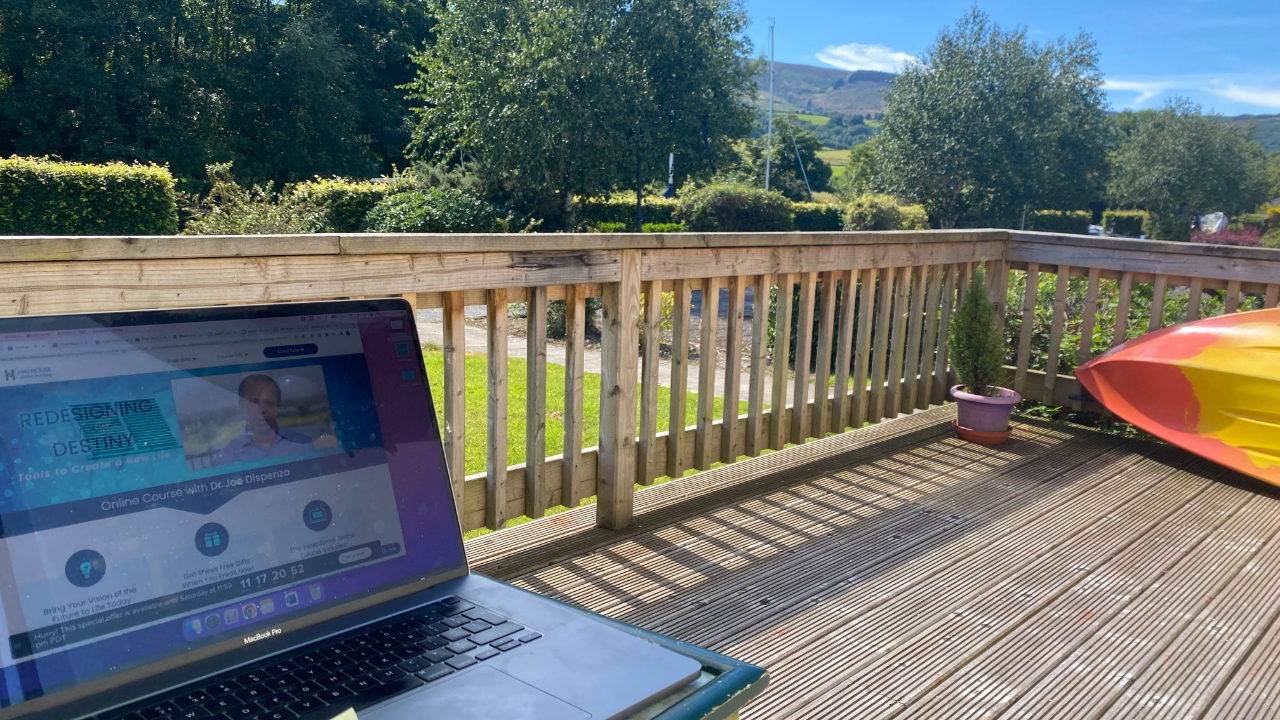
For a significant stretch of my career as a therapist, I kept saying some version of the same thing to my supervisor.
I love the work. But how I work needs to change. I just don't know how, or what that looks like.
I was in a burnout cycle - not constantly or in any way dramatic, but persistently. The kind that creeps up quietly and sits in the background of everything. I loved my clients. I loved the depth of the work. What I could not sustain was the shape of it — the relentless one-in, one-out rhythm of a full in-person caseload, the fixed hours, the physical and emotional energy it required session after session with no real variation.
I knew something needed to change. I did not yet know what.
The moment something shifted
In early 2015, I flew to California for Brendon Burchard's Experts Academy. It was one of those experiences that lands differently than you expect. I went curious and came back with something that felt a lot like direction.
The core idea - that your expertise, your knowledge, your years of training and experience could be packaged, shared, and built into something that reached beyond the one-hour, one-client model - was not entirely new to me. But hearing it laid out so clearly, being in a room full of people who were doing exactly that, made it feel possible in a way it had not before.
What was actually hard
The tech, honestly, was not the hardest part. The hardest part was the question I could not stop asking: how do I find clients who want to work online?
Growing a thriving in-person practice had taken years of word of mouth, local reputation, GP referrals, the slow accumulation of trust in a community. Online was a completely different world. I did not have an audience. I did not have visibility. I had expertise and a platform and absolutely no idea how to connect the two in a way that would actually bring the right people through the virtual door.
That gap (between knowing your work is good and knowing how to make it findable) is where most practitioners get stuck. I know because I was stuck there too. And because I hear it from almost every client I work with now.
What I got wrong and what I learned from it
I tried too many platforms. I built full programmes on systems that were cheap, or free, or that someone had recommended in a Facebook group, and then spent enormous amounts of time maintaining them, troubleshooting them, and eventually migrating away from them when they stopped working or stopped being supported.
It took longer than I would like to admit to fully absorb a lesson that now seems obvious:
If you don't pay for it in money, you pay for it in time and energy. But pay you will... that is inevitable.
Kajabi is not the cheapest platform. I will not pretend otherwise. But it is, in my experience after more than a decade of building online, the best all-in-one solution for practitioners who want to sell their knowledge without becoming accidental IT technicians in the process. The time I wasted on cheaper alternatives cost me far more than a Kajabi subscription ever has.
What it looks like now
I work from home in County Clare, in the west of Ireland. My office is my own space, not a shared consulting room, not a rented room in someone else's practice. Mine.
On days when my schedule has a gap between clients, I go kayaking. I come back, I make tea, and I sit down for the next session. On sunny days, I take my laptop outside and work under the parasol. These are small things, but they are not trivial. They are what energy management actually looks like in practice, not a concept in a self-care workshop, but a real shift in how I structure my working day.
The thing I notice most, though, is not the logistics. It is the energy. Working online protects something that in-person practice, at the volume I was carrying, could not always protect. Whether that is the nature of online work itself or whether I have simply become better at protecting my own energy over the years (probably both) the difference is real, and it matters.
What I wish I had known at the start
A few things, with the benefit of hindsight:
- Get clear on your offer before you choose your platform. The platform should serve the business model, not the other way around.
- Stop trying to do it the free way. Your time has value. Protecting it is not an indulgence.
- The audience-building piece takes longer than the technical piece. Start it earlier than it feels necessary.
- You do not need to figure it out alone. The practitioners I see make the fastest, most sustainable progress are the ones who get support, whether that is mentoring, a peer group, or someone who has already built what they are trying to build.
That last point is, if I am honest, a significant part of why I do the work I do now. I spent years finding my own way through this, and I would rather help practitioners get there without the long way round.
If any of this sounds familiar
If you are in that place I was in, loving the work but knowing the shape of it needs to change, not quite sure what online could look like for you, or already online but feeling like you are building in the dark, I would love to have a conversation.
You can find out more about 1:1 mentoring here, or if you are specifically exploring Kajabi as your platform, the Kajabi page sets out how we can work together on that. And if you just want to talk it through first, a Connection Call is always the simplest place to start.
Book a Connection Call: hummingbirdmentoring.mykajabi.com/connection
Ready to change the shape of how you work?
Let's talk about what moving your practice online could actually look like for you - practically, personally, and sustainably.
Author