
How to Map Out Your 2027 Content Calendar in One Afternoon
Nov 03, 2026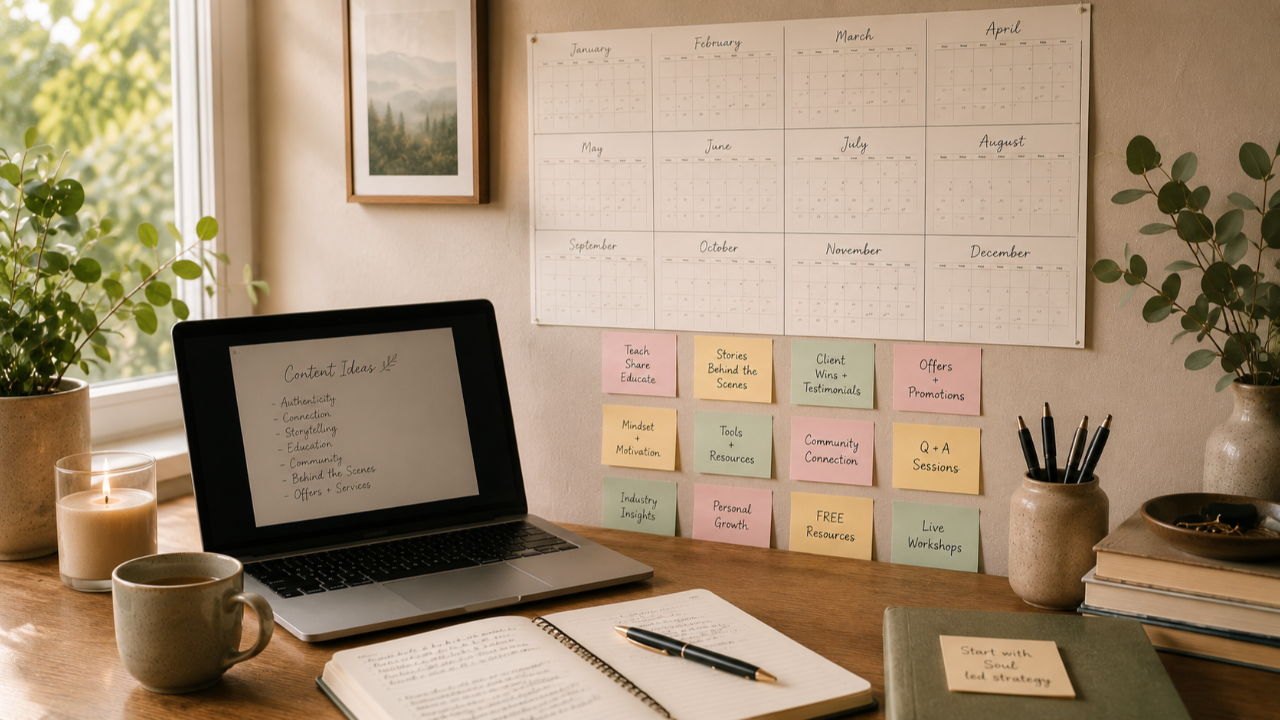
Every November, without fail, I get some version of the same message. "I know I should be planning next year's content, but I don't even know where to start." So let me show you exactly how I do it, because it genuinely doesn't need to take longer than an afternoon.
I'm planning my own 2027 calendar using almost exactly this process as I write this, so consider it a live demonstration rather than a theory.
Start with your pillars, not your topics
The biggest time sink in content planning is trying to think of individual topics before you've decided what categories those topics should even fall into. Start instead with your content pillars, the handful of themes that everything you create should map back to.
For my own content, that's four pillars: practical how-to guidance, mindset and inner work, platform and tool explainers, and story or behind the scenes content. Yours might look different, but the principle holds. Decide your three or four pillars first, and every individual post idea becomes a much smaller decision from there.
Map the seasons before the specifics
Before you fill in a single topic, sketch out the shape of your year in broad seasonal strokes. When are your natural high energy months? When do you know, from experience, that things quieten down? When are you likely to want a genuine break?
I plan mine around the actual rhythm of the year rather than generic marketing seasons. Easing back in after summer, fresh start energy in September, deeper reflective content as the year turns inward in October, visibility and planning themes in November, and a gentle wind down in December with a proper pause over the festive period. Map your own rhythm honestly, including where you know you'll need to protect your energy.
Assign one pillar per week
Once your seasons are sketched, the actual weekly planning becomes almost mechanical. Pick your publishing day, then rotate through your pillars in order, week after week. This one simple rule does an enormous amount of the thinking for you, because you're never sitting down to a blank page wondering what on earth to write about. You already know which pillar this week belongs to.
Write titles before content
For this first pass, resist the urge to draft anything. Just write working titles, one per week, for the full stretch you're planning. A rough title and a one line note about the angle is genuinely enough at this stage. You can refine, reorder or swap any of them later, but having the full shape mapped out removes the single biggest source of content overwhelm, which is not knowing what's coming next.
Flag anything that needs input from you in advance
If your calendar includes any story pillar posts or anything drawing on your own personal experience, flag those now rather than waiting until the week they're due. Personal stories need a bit of breathing room to gather your thoughts properly, and it's far kinder to future you to have that noted well in advance.
Build in your pause points from the start
The single most important thing you can do in this whole process is decide, right now, where your planned breaks will sit. Not as an afterthought once you're exhausted, but as a genuine, pre-agreed part of the calendar. A calendar with intentional pauses built in is one you'll actually stick to. A calendar with no room to breathe is one you'll eventually abandon.
You don't have to plan alone
If a full afternoon of planning still feels like a lot to face on your own, this is exactly the kind of structured, practical support I offer inside The Nest and through mentoring. Sometimes having someone to talk the shape of your year through with makes all the difference between a calendar that gets built and one that stays a good intention.
Start Here: Welcome Home is a free, no pressure place to begin if you'd like a hand with yours.
Frequently Asked Questions
How long should it take to plan a full year of content? With a clear pillar structure in place, a genuine planning session can take as little as an afternoon. Most of the time content planning takes is spent deciding what to write about, and pillars remove much of that decision making in advance.
How many content pillars should I have? Three or four tends to work well for most practitioners. Enough to give genuine variety across your content, without so many that your messaging feels scattered or unfocused.
Should I plan content around the calendar year or the school year? Either can work, and the right choice depends on your own natural rhythm and your audience's. Many practitioners find planning around September to the following summer feels more intuitive, since it mirrors the energy shifts most people experience through the year.
What should I do if I fall behind on a content calendar partway through the year? Revisit your pillars and simply pick up from the current week rather than trying to catch up on everything you missed. A content calendar is a guide, not a debt to be repaid, and it's always more useful adjusted than abandoned.
Author